
Views: 0 Author: Site Editor Publish Time: 2026-11-13 Origin: Site


When evaluating modern propulsion systems, engineers consistently face one critical bottleneck. Energy storage. As global markets aggressively shift away from internal combustion engines, clean transit demands a power source that is truly reliable, lightweight, and highly efficient.
In this technical guide, we will explore exactly why a Lithium Battery for Electric Vehicle remains the undisputed top choice for automotive design. This technology is fundamentally reshaping how we approach daily urban commuting and heavy-duty long-distance travel.
Superior Volumetric Density: Lithium-ion technology currently offers the highest power-to-weight ratio in commercial applications. This directly translates to longer driving ranges without burdening the chassis with dead weight.
Rapid Charge Acceptance: Advanced cell architectures support significantly faster charging cycles compared to legacy lead-acid alternatives. This makes high-frequency daily usage highly practical.
Minimal Self-Discharge: These cells maintain their stored charge for extended periods when the vehicle is parked, ensuring consistent fleet readiness.
Extended Cycle Life: Modern chemistry, actively regulated by sophisticated management systems, allows for thousands of deep discharge cycles with negligible capacity fade.
Scalable Manufacturing: The global production ecosystem has matured rapidly. This drives down per-kilowatt costs and secures worldwide availability.
To understand why the automotive sector universally adopted this energy storage method, we must examine the fundamental chemistry. Lithium is the lightest metal on the periodic table. It possesses one of the highest electrochemical potentials of any solid element. This unique combination of low atomic mass and high reactivity makes it the perfect candidate for dense power storage. In practical terms, a pack utilizing lithium stores massive amounts of electrical energy without adding sluggish weight to the vehicle.
The operational mechanics rely on the seamless movement of ions. During the discharge phase, lithium ions travel from the negative anode through a liquid or polymer electrolyte to the positive cathode. This microscopic movement releases electrons, creating the electrical current that drives the traction motor. Conversely, plugging the vehicle into a fast charger reverses this process, forcing the ions back into the anode.
This intercalation process is highly reversible and structurally stable. Older chemistries relied on harsh chemical reactions that physically degraded the electrode materials over time. In contrast, the microscopic ion movement in lithium cells is remarkably efficient. This stability is the primary reason these modules deliver consistent power output while maintaining a compact physical footprint.
Picture a fleet of commercial delivery vans operating in the dead of winter. For decades, the persistent fear of being stranded miles from a depot was the primary barrier to widespread adoption. The definitive engineering solution to this problem lies in energy density. This metric measures exactly how much power a module holds relative to its physical weight.
The exceptionally high energy density of lithium is its most significant competitive advantage. Current commercial packs typically exhibit a density ranging from 150 to 280 Watt-hours per kilogram. Traditional lead-acid alternatives hover around a mere 30 to 40 Watt-hours per kilogram. If an automaker attempted to power a modern sedan with lead-acid to achieve a 300-mile range, the vehicle would be too heavy to accelerate safely.
Consequently, engineers can pack massive energy reserves into a relatively lightweight module. This weight reduction creates a compounding positive effect on overall vehicle dynamics. A lighter chassis requires less energy to move, handles sharper corners safely, and experiences far less wear on suspension components.
To truly understand the value of modern energy storage, we must evaluate it objectively against the legacy technologies it replaced.
Battery Chemistry | Energy Density | Average Cycle Life | Charging Speed | Primary Drawback |
|---|---|---|---|---|
Lithium-Ion | 150 - 280 Wh/kg | 1,500 - 3,000+ | Very Fast | Requires complex thermal management |
Lead-Acid | 30 - 50 Wh/kg | 300 - 500 | Slow | Excessively heavy, short lifespan |
NiMH | 60 - 120 Wh/kg | 500 - 1,000 | Moderate | High self-discharge, memory effect |
Moving from theory to practical application, how do engineers select the right module? The inherent versatility of lithium technology allows it to be scaled for a wide spectrum of transit options. Each application has distinct voltage, weight, and spatial requirements.
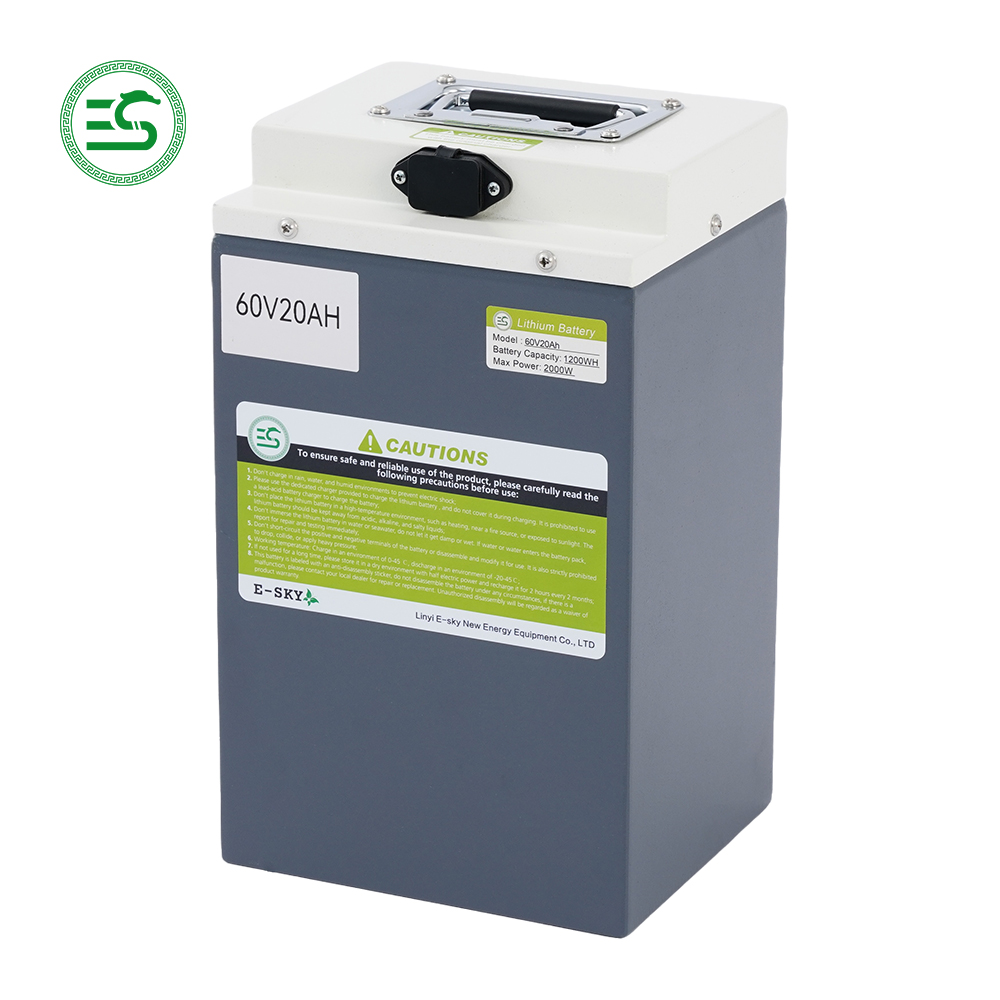
Specifically, in the micro-mobility and last-mile delivery sector, physical space is severely restricted. Engineers must find a specific voltage-to-capacity sweet spot. For these scenarios, a 1200WH 60V Lithium Battery provides the exact balance needed. The 60V architecture ensures highly efficient motor operation with a lower current draw. This directly reduces heat generation in the vehicle wiring harness. Simultaneously, the 1200WH capacity guarantees sufficient range for full-day urban routes without requiring a massive, bulky casing that would compromise vehicle handling.
Moving up to passenger cars, the requirements shift toward massive energy reserves and instantaneous discharge capabilities. These packs are typically integrated directly into the floorboard in a skateboard platform. This lowers the center of gravity and drastically improves crash safety.
Modern transit demands absolute convenience and rapid turnaround times. Lithium chemistry enables the development of Direct Current fast charging. The internal resistance of these cells is extremely low compared to legacy types. This allows the module to accept high-amperage electrical currents without immediately overheating.
Furthermore, rapid charging generates significant thermal stress. To manage this heat, modern packs employ advanced active thermal management systems. These often utilize liquid cooling channels integrated directly between the cell modules. These systems ensure the cells remain within their optimal operating window, typically between 20 and 40 degrees Celsius. Maintaining this temperature facilitates faster charging and guarantees peak performance during high-load conditions like steep highway climbs.
Looking at current industry trajectories, the market is experiencing a pronounced shift in preferred cathode chemistries. While Nickel Manganese Cobalt historically dominated passenger cars due to its raw energy density, automakers are increasingly pivoting toward Lithium Iron Phosphate for standard-range fleets. LFP offers exceptional thermal stability, a longer cycle life, and significantly lower production costs. Most importantly, it bypasses the volatile and ethically complex cobalt supply chain.
In addition, geopolitical pressures are forcing a massive restructuring of global manufacturing. Automakers are heavily investing in localized cell production and raw material refinement. This localization trend accelerates the development of domestic gigafactories. It ensures a robust, uninterrupted supply of Electric Vehicle Use Lithium Battery systems, making the industry far less dependent on centralized overseas imports.
Commercial fleet operators closely analyze the Total Cost of Ownership before transitioning to clean transit. A critical factor here is cycle life. This refers to the number of complete charge and discharge cycles a module can undergo before its capacity degrades to 80 percent of its original state.
A well-engineered system is designed to endure thousands of full cycles. For the average driver, this translates to hundreds of thousands of miles of reliable service. This impressive durability is heavily dependent on the Battery Management System. The BMS acts as a sophisticated electronic brain. It constantly monitors the voltage, current, and temperature of every individual cell. By performing active cell balancing, the BMS ensures no single cell is overcharged or over-discharged. By strictly regulating these parameters, the BMS prevents microscopic damage and drastically extends operational health.
The dominance of lithium-based storage is not a passing trend. It is an engineering necessity driven by physics and commercial viability. By providing the perfect balance of lightweight design, high power output, and long-term durability, this technology has successfully transformed clean transit into a practical daily reality. As recycling infrastructure expands and cathode chemistries evolve, these systems will only become safer and more cost-effective.
If you are engineering a new transit solution or upgrading an existing fleet, selecting the correct power module is your most critical decision. For urban transit, scooters, and delivery applications requiring optimal power-to-weight ratios, explore the specifications of a reliable 60V Lithium Battery for Electric Vehicle Use to ensure your project meets the highest standards of efficiency and longevity.
Most modern packs are rigorously designed to last between 10 to 20 years, translating to roughly 100,000 to 200,000 miles of driving. Lifespan is measured in cycle life. Modern thermal management systems and active cell balancing ensure a longevity that often outlasts the mechanical chassis of the vehicle itself.
The higher cost is driven by the complex extraction of raw materials and the highly controlled clean-room environments required for manufacturing. The integration of sophisticated Battery Management Systems and liquid cooling hardware further adds to the price. However, massive global scaling has dropped the cost per kilowatt-hour dramatically over the past decade.
While all highly concentrated energy storage carries some risk, the statistical likelihood of a fire is significantly lower than that of an internal combustion engine. Advanced management systems constantly monitor individual cell temperatures. If anomalies are detected, the system instantly isolates the power draw, making catastrophic failures exceedingly rare.
Freezing temperatures have a measurable impact. Cold weather slows down internal electrochemical reactions, which increases internal resistance. This temporarily reduces driving range and limits fast-charging speeds. To mitigate this, modern systems feature pre-conditioning software that uses grid power to warm the pack to its optimal temperature before you begin driving.
The industry is continuously evolving. Researchers are heavily investing in solid-state technology for better safety and sodium-ion configurations that utilize highly abundant materials. While these show great promise, current lithium-ion architectures possess the mature manufacturing infrastructure and proven reliability necessary to remain the industry leader for the foreseeable future.
Relying exclusively on Level 3 DC fast chargers can slightly accelerate cell degradation due to the intense heat generated during rapid energy transfer. However, modern active liquid cooling systems mitigate the vast majority of this thermal stress. For optimal longevity, engineers recommend using Level 2 AC charging for daily use and reserving DC fast charging for long-distance travel.
When a pack degrades below 80 percent capacity, it is often repurposed for stationary grid storage, where weight and space are no longer critical factors. Once they reach their true end-of-life, advanced hydrometallurgical recycling facilities recover up to 95 percent of the critical metals, including nickel and cobalt, feeding them directly back into the manufacturing supply chain.


