
Views: 0 Author: Site Editor Publish Time: 2026-10-20 Origin: Site


Are you tired of sitting in gridlocked city traffic while bicycles and pedestrians breeze past? Standard entry-level scooters might seem like a quick fix. However, they frequently fall short in real-world conditions. They struggle on moderate hills. They lack the necessary punch to merge safely. Worse, they often leave riders stranded with depleted batteries. Upgrading to a 60V powered electric scooter resolves these exact commuting headaches.
In this comprehensive guide, we will break down the real-world performance advantages of high-voltage systems from an engineering perspective. Whether you are navigating steep urban inclines or simply looking to cut your travel time in half, we will help you determine if this powerful upgrade is the smart choice for your daily routine.
Unmatched Torque and Acceleration: Operating at a higher voltage allows the motor to generate significantly more torque. This mechanical advantage ensures rapid acceleration. It is critical for safely navigating stop-and-go urban traffic and maintaining momentum.
Superior Hill Climbing Capabilities: Higher voltage directly translates to sustained power delivery. A 60-volt system effortlessly conquers steep inclines up to 30-degree grades without experiencing the severe speed drops typical of lower-voltage models.
Optimal Battery Efficiency and Thermal Management: By running at 60 volts, the electrical system requires fewer amps to produce the same wattage. This reduces electrical resistance and heat generation. Consequently, it preserves the health of the battery and internal controllers over time.
52V vs. 60V Dynamics: While 52V scooters are adequate for flat terrains and lighter payloads, a 60V system provides a crucial power buffer. This makes it the superior choice for heavier riders or those dealing with demanding hilly landscapes.
Future-Proof Commuting: Investing in a high-power 60V e-scooter ensures long-term reliability. Its robust build quality and advanced suspension systems deliver consistent performance for daily short-distance trips.
Recent market analyses reveal a significant shift in urban transit ecosystems. As city infrastructures evolve with expanded bike lanes and greenways, consumers are rapidly graduating from entry-level rental models to high-voltage personal alternatives. Why is this happening? Modern professionals demand absolute reliability. They require substantial power reserves to handle the unpredictable nature of daily city commutes without the constant need for daily recharging.
Consequently, the market segment for 60V architectures is seeing unprecedented growth. Riders are no longer settling for basic portability. Instead, they prioritize thermal efficiency, sustained torque, and structural integrity to navigate complex urban environments safely.
When evaluating micro-mobility options for daily commutes, the underlying electrical architecture dictates the true capabilities of the machine. A 60-volt system represents a massive leap from standard entry-level models. It offers a premium blend of power, efficiency, and durability that transforms a basic ride into a highly capable transit solution.
To understand why a 60-volt system excels, it helps to grasp the basic physics of electrical power. In electric vehicles, power is measured in Watts, which is the product of Voltage multiplied by Amperage. In electrical engineering terms, voltage acts as the electromotive force pushing current through the phase wires.
If a motor requires 2400 Watts of peak power to muscle up a steep hill, a 48V system must pull 50 Amps of current to achieve this. Pushing such high amperage generates substantial heat. Over time, this thermal stress degrades lithium-ion cells and can even melt electronic speed controller wires. Conversely, a 60V system only needs to pull 40 Amps to achieve that exact same 2400-Watt output. Because it requires less current to deliver identical or greater power, a 60V system runs remarkably cooler. It operates more efficiently and minimizes wear on sensitive internal electronics.
In the current electric scooter market, voltage typically ranges from 36V to 72V. Budget commuter scooters usually rely on 36V and 48V systems. While they are lightweight and easy to carry, they severely lack the torque necessary for steep hills. They often bog down under the weight of an adult carrying a heavy backpack.
On the opposite end of the spectrum, 72V systems are reserved for extreme hyper-scooters. These massive machines offer racing-level speeds but come with a hefty penalty. They feature excessive physical weight often exceeding 100 pounds, astronomical costs, and zero portability. This makes them highly impractical for a standard office commute.
The 60V architecture sits perfectly in the middle. It provides enough electrical pressure to deliver thrilling performance while maintaining a physical footprint that is still manageable for practical urban use. You avoid the back-breaking weight of a hyper-scooter while drastically outperforming standard commuter models.
For riders undertaking daily trips ranging from two to five miles, vehicle performance directly impacts travel time and personal safety. Having extra power on tap is not just about going fast. It is fundamentally about control.
In densely packed urban environments, acceleration is arguably more important than top speed. A high-performance 60V electric scooter provides the instant torque necessary to pull away from red lights quickly. This allows you to keep up with the flow of city traffic rather than being squeezed toward the curb. Matching the speed of surrounding vehicles at intersections significantly reduces the risk of being dangerously overtaken by cars.
While local laws strictly regulate maximum riding speeds, the inherent capability of a 60V system means something very important for the daily commuter. When you cruise at a legal 20 mph, the dual motors are barely working. This results in a highly stable, vibration-free ride that does not strain the machine.
One of the most common frustrations with entry-level scooters is the dreaded slow-down when approaching a hill. A basic 36V scooter might drop to a crawling 5 mph on a 15-degree incline. This often forces you to kick manually or walk the scooter up the sidewalk.
A 60V system leverages its high voltage to maintain aggressive momentum. Real-world engineering tests show that these scooters routinely tackle 25-degree to 30-degree inclines without a noticeable drop in speed. If your city features a hilly topography, this voltage tier ensures your commuting schedule is never disrupted by the landscape.
Motor strain is a primary cause of premature scooter failure. Standard retail scooters are typically rated for a maximum payload of 220 pounds. When riders approach or exceed this limit, battery drain accelerates rapidly, and top speed plummets.
Because 60V motors process power much more efficiently, they do not bog down under heavier payloads. These robust systems routinely support capacities up to 330 pounds with zero effort. The structural integrity required to house a large 60V battery also means the frame, stem, and suspension are built to heavy-duty standards.
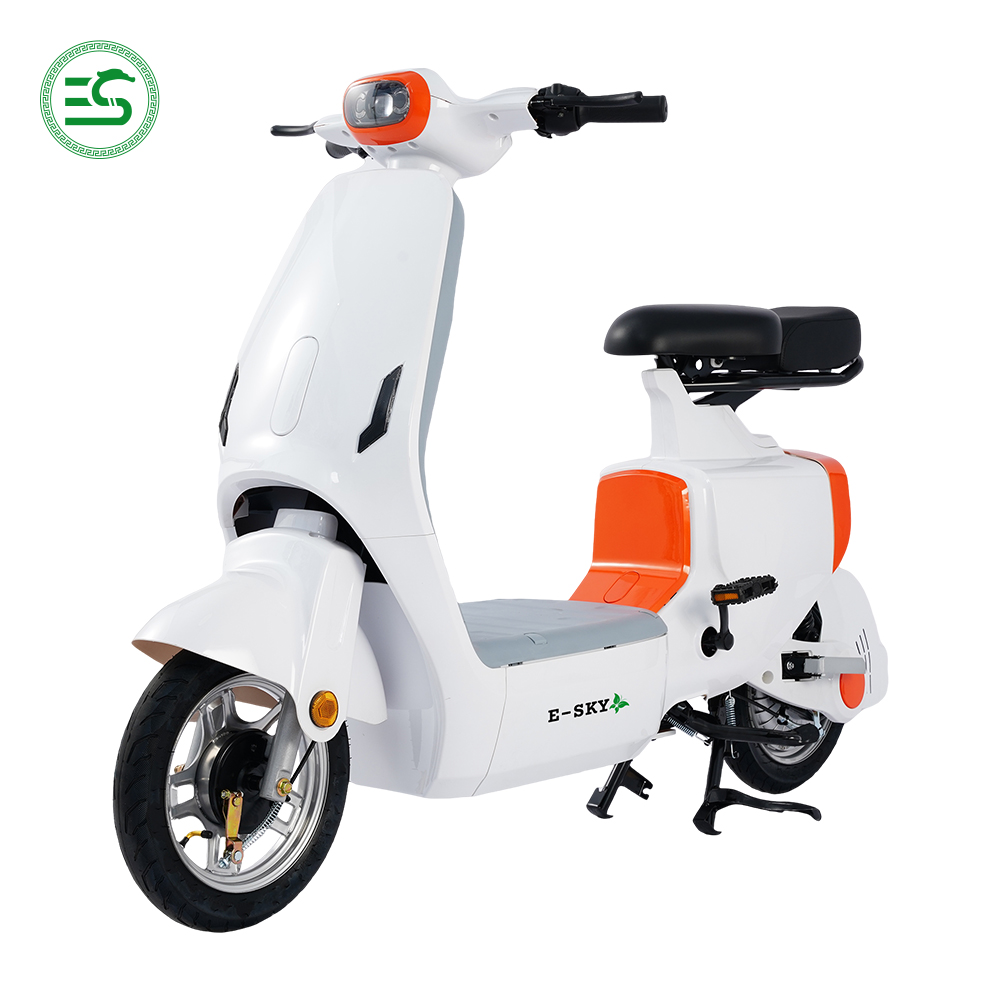
For buyers looking to upgrade from an entry-level model, the decision often boils down to choosing between a 52V and a 60V system. While both are considered high-performance tiers, the empirical differences in power delivery and longevity are substantial.
The baseline power output of a 60V system is inherently higher. A typical 52V scooter might feature a single 1000-Watt motor or dual 800-Watt motors. In contrast, 60V scooters are almost exclusively dual-motor designs. They often push anywhere from 1200 Watts to 3000 Watts per motor at peak output.
This raw power difference translates directly into off-the-line torque. You should choose a 60V model over a 52V model if your commute involves aggressive elevation changes. It is also the better choice if you simply prefer the mechanical confidence of having a higher top-speed ceiling available for evasive maneuvers.
Specification Metric | 52V Electric Scooter System | 60V Electric Scooter System |
|---|---|---|
Typical Motor Architecture | Single 1000W or Dual 800W | Dual 1200W to Dual 3000W |
Peak Incline Rating | Up to 20 Degrees | 30+ Degrees |
Thermal Heat Generation | Moderate to High under heavy load | Low to Moderate due to high efficiency |
Ideal Rider Profile | Flat terrain commuters under 200 pounds | Hilly terrain commuters over 200 pounds |
Acceleration Curve | Linear and smooth | Aggressive and immediate |
As established by Ohm's Law, achieving high wattage at a lower voltage requires high amperage. When you push a 52V scooter to its absolute limits on a steep hill in the middle of summer, that high current generates excess thermal energy. Heat is the natural enemy of lithium-ion cells and electronic speed controllers.
Because a 60V system uses less current to achieve the same or greater power, it features vastly superior heat management. This thermal efficiency significantly extends the lifespan of the internal components. Ultimately, it reduces your long-term maintenance costs.
Integrating a high-voltage vehicle into your daily routine offers tangible time-saving benefits. It completely transforms how you interact with urban infrastructure.
Traffic data consistently shows that the average speed of a car in congested cities frequently drops below 15 mph due to gridlock and endless traffic lights. A high-power electric scooter bypasses these bottlenecks entirely.
By utilizing a reliable 60V scooter for short distance trips, you can maintain a consistent, safe speed along alternative paths. The rapid acceleration allows you to clear busy intersections swiftly. You can easily dodge sudden obstacles like a car door opening unexpectedly. This effectively cuts a frustrating 30-minute drive into a predictable, breezy 10-minute ride.
Range anxiety is a common concern among electric vehicle owners. However, a 60V battery pack inherently carries a massive capacity buffer. A typical 60V 20 Amp-hour battery holds roughly 1200 Watt-hours of energy.
If your dual-motor scooter consumes roughly 25 Watt-hours per mile, the total real-world range approaches 48 miles. For a professional taking a two-mile trip to work and a two-mile trip back, this massive capacity allows for up to two full weeks of riding on a single charge. Even if you forget to plug the scooter in for a few days, your daily commute remains completely uninterrupted.
Owning a high-performance vehicle requires a basic understanding of the variables that impact its efficiency. By optimizing these factors, you ensure your investment operates exactly to the manufacturer's peak specifications.
Performance Factor | Impact on Speed and Range | Engineering Optimization Strategy |
|---|---|---|
Rider Payload | Heavier payloads require more torque, drawing higher current from the battery and slightly reducing overall range. | Maintain steady acceleration rather than full-throttle bursts if carrying heavy cargo. |
Tire Pressure | Under-inflated tires increase rolling resistance. This forces the 60V motor to work harder and drains the battery faster. | Check tire pressure weekly. Inflate to the manufacturer recommended level, typically 45 to 50 PSI. |
Terrain and Inclines | Continuous steep hill climbing consumes significantly more wattage than riding on flat asphalt. | Utilize dual-motor modes for steep hills to prevent overheating a single motor. |
Wind Resistance | Riding against strong headwinds at high speeds drastically increases aerodynamic drag. | Ride at moderate speeds during high wind conditions to conserve battery life. |
Ambient Temperature | Lithium-ion batteries experience temporary capacity loss in freezing temperatures. | Store the scooter indoors at room temperature before cold-weather rides. |
To protect the expensive lithium-ion cells inside your scooter deck, you must adhere to strict battery management protocols. Never deplete the battery to zero percent. Deep discharges cause irreversible chemical degradation within the cells. Instead, aim to keep the battery charge between 20 percent and 80 percent for daily use. Only charge it to full capacity when preparing for an unusually long weekend ride.
Furthermore, temperature plays a critical role in battery health. Never plug the scooter in immediately after a hard ride while the deck is still hot to the touch. Let it cool down for 30 minutes. Also, avoid storing the scooter in freezing winter garages or under direct summer sunlight. Extreme temperatures degrade battery capacity rapidly over time.
Before finalizing a purchasing decision, it is crucial to objectively weigh the empirical benefits against the practical drawbacks of adopting high-voltage micro-mobility. Consider your specific living situation and physical capabilities.
The most prominent benefit is raw, unadulterated performance. A 60V system provides high top speeds, allowing experienced riders to safely navigate multi-lane roads where permitted. Beyond just speed, these scooters feature exceptional build quality. To safely handle high torque, manufacturers construct 60V frames with aviation-grade aluminum alloys. This prevents stem wobble and frame bending under stress.
High speeds also demand high stopping power. These models almost always come standard with full hydraulic disc brakes. They offer precise, instantaneous stopping capabilities that basic mechanical brakes simply cannot match. Add in premium adjustable hydraulic suspension systems, and your joints are perfectly isolated from harsh road vibrations and potholes.
The primary drawback of a 60-volt scooter is its substantial physical weight. Accommodating a larger battery array, heavier dual motors, and a reinforced chassis usually pushes the weight of these scooters to between 70 and 100 pounds. If your daily commute requires carrying the scooter up three flights of stairs to your apartment, a 60V model will quickly become a physical burden.
Additionally, the initial financial investment is noticeably higher. Advanced engineering, massive lithium-ion packs, and premium hydraulic components drive up the manufacturing cost. Finally, there is a steeper learning curve. The aggressive torque of a 60V dual-motor system can be highly intimidating for beginners. It requires careful trigger discipline to avoid accidental wheel-spin.
A 60V system is not for everyone, but it is the absolute perfect tool for specific rider profiles. You should strongly consider this investment if you fall into one of the following categories:
The Dedicated Daily Commuter: You rely on your scooter as your primary mode of transportation. You need it to perform flawlessly in various weather conditions and heavy traffic scenarios.
Heavier Riders: Adults weighing over 200 pounds will find that lower-voltage scooters struggle immensely. A 60V system carries heavier payloads without straining the motors.
Hilly Terrain Residents: If your city features steep inclines, the high torque output of a 60V motor is a strict necessity to maintain forward momentum safely.
It is important to evaluate your actual daily needs. If your commute involves a strict last-mile scenario, a lightweight 36V or 48V ultra-portable scooter is a much more practical choice. For instance, riding one mile to a train station, folding the scooter to carry onto a crowded subway car, and riding another short distance to the office demands portability over raw power.
However, for those who prioritize durability, raw power, and a premium riding experience, upgrading to a premium 60V electric commuter scooter offers a future-proof solution. It ensures you will not be looking for a costly replacement just a few months down the line.
Short trips can certainly be done on basic, entry-level scooters. Relying on a 60-volt system, however, maximizes your safety on the road. It drastically improves vehicle durability and transforms a mundane morning commute into an exhilarating ride.
By providing unmatched torque, superior hill-climbing abilities, and massive battery reserves, these machines represent the pinnacle of practical urban transport. Are you ready to upgrade your daily transit? We highly recommend exploring the premium lineup at ESKY. You can find the perfect high-performance model tailored to your specific commuting needs by visiting the ESKY official website today. Evaluate the detailed specifications and secure a smarter, faster commute.
Typically, a 60V electric scooter can reach top speeds between 35 mph and 50 mph. The exact speed depends heavily on the motor wattage, such as dual 1000-Watt versus dual 2000-Watt motors. It also depends on the amperage of the motor controller and the overall weight of the rider. It is crucial to remember that while the scooter is capable of these high speeds, riders should always adhere to local speed limits and road regulations to ensure safety.
It is not overkill if your specific commute demands high performance. If your two-mile trip includes steep hills or requires sharing the road with fast-moving heavy traffic where quick acceleration is a safety necessity, the 60V system provides a much-needed power buffer. Plus, using a high-capacity scooter for short trips means you will only need to plug it into the wall once every week or two.
Charging times generally range from 6 to 12 hours. This variance depends entirely on the Amp-hour rating of the battery pack and the output of the charger. For example, a 20 Amp-hour battery charged with a standard 2-amp charger will take roughly 10 hours from completely empty. Many 60V models support dual charging ports or fast chargers, which can cut this charging time in half. However, standard slow charging is generally better for preserving long-term battery health.
Yes, superior hill-climbing ability is one of the absolute defining advantages of a 60V system. Thanks to the massive torque generated by the higher voltage and the dual motors commonly found on these models, they can easily tackle 25 percent to 35 percent inclines. Unlike 36V scooters that may stall out or require the rider to kick-push up a hill, a 60V scooter will maintain a steady, robust speed even on highly demanding gradients.
With proper maintenance and careful storage, a high-quality 60V lithium-ion battery can easily last between three to five years. In technical terms, these premium batteries are rated for roughly 500 to 1,000 full charge cycles before the user will begin to notice a significant drop in maximum capacity, typically a degradation of about 20 percent. Avoiding deep zero percent discharges and keeping the scooter out of extreme temperatures will help you achieve the maximum possible lifespan.
The legal requirements vary significantly depending on your jurisdiction. Because 60V scooters are capable of exceeding 30 mph, many cities and countries classify them differently than low-speed recreational kick scooters. They may fall under the category of mopeds or light electric vehicles. This classification could require a valid driver license, registration, or specific liability insurance. Always research and comply with your local municipal and state transit laws before taking a high-speed scooter onto public roads.
While beginners can learn to ride a 60V scooter, extreme caution is required. The instant torque provided by dual motors can easily cause wheel-spin or throw an unprepared rider off balance. Most modern 60V scooters feature adjustable riding modes. Beginners should always start in the lowest gear or single-motor mode to limit acceleration and top speed while they get accustomed to the weight and braking dynamics of the vehicle.
Due to the massive battery cells, dual motors, and reinforced aviation-grade aluminum frames required to handle high speeds, a 60V scooter is significantly heavier than an entry-level model. You can expect these scooters to weigh anywhere from 70 pounds to over 100 pounds. Riders should carefully consider this weight if their daily routine involves carrying the scooter up multiple flights of stairs.


